(I) Product Overview
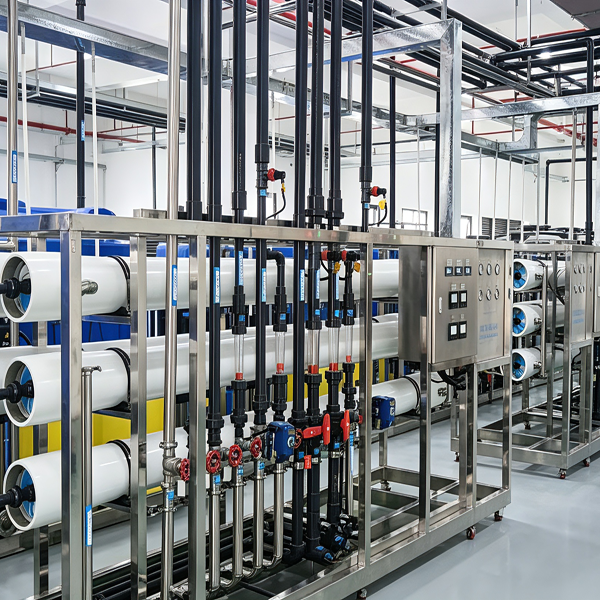
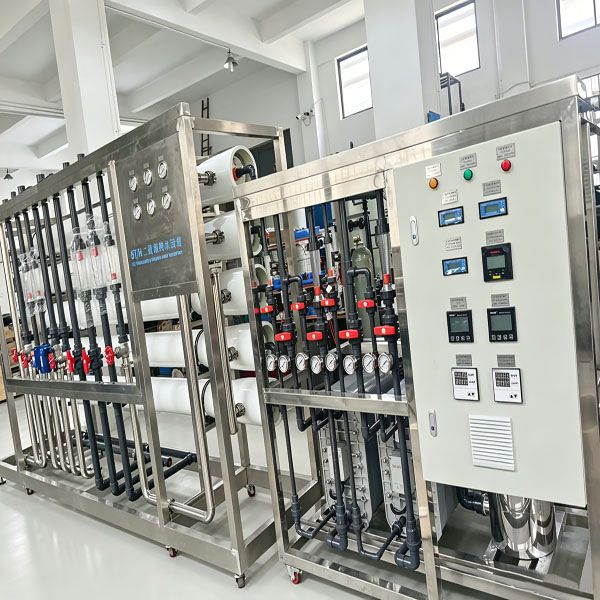
EDI (Electrodeionization) ultrapure water equipment is a continuous deep desalination and pure water production device that does not require acid-base regeneration. Combining the principles of ion exchange resin and electrodialysis electrochemistry, it can further purify reverse osmosis (RO) produced water to ultrapure water standards. It is the core terminal equipment for industrial high-end pure water preparation. The equipment uses RO produced water as the inlet water, and through the directional migration of cations and anions in the water driven by an electric field, it simultaneously achieves resin self-regeneration and stably produces high-purity ultrapure water with a resistivity of over 15MΩ・cm. It is widely used in industries that have strict requirements on water quality resistivity, TOC, and silicon content, such as electronic semiconductors, lithium batteries, photovoltaics, laboratories, pharmaceuticals, medical devices, and precision electroplating. It replaces traditional mixed bed processes and achieves green, continuous, and automated water production.
(II) Core product features
1. No need for acid-base regeneration, environmentally friendly and low cost. It eliminates the traditional mixed bed regeneration process using hydrochloric acid and sodium hydroxide, resulting in no discharge of acid-base waste liquid. This saves costs on chemical procurement, storage, and neutralization treatment, while reducing operational and maintenance safety risks.
2. Continuous and stable water production with minimal water quality fluctuations. Once powered on, it can continuously produce water, with no abrupt changes in water quality during start-up and shutdown. The resistivity of the produced water remains stable over a long period of time, ranging from 10 to 18.2 MΩ·cm. It effectively controls trace ions such as silicon, heavy metals, and nitrates.
3. High automation level and simple operation and maintenance. Equipped with online resistivity, flow rate, pressure, and concentrated water conductivity monitoring, it automatically adjusts the concentrated water reflux and product water flow rate. The resin is regenerated in situ by an electric field, eliminating the need for manual disassembly and replacement of resin.
4. Low operating energy consumption and high water utilization rate: The module has low voltage and low power consumption; the concentrated water can be recirculated to the front end of the RO system for recovery, achieving an overall water recovery rate of 85% to 95%. The water resource loss is significantly lower than that of traditional mixed beds.
With a compact footprint and a long service life, it features a standard modular EDI membrane stack design that allows for expansion through single unit/multiple units in parallel. The membrane stack has a normal service life of 2 to 3 years, and the supporting piping and automatic control system are corrosion-resistant, ensuring a long maintenance cycle.
5. Low TOC and low silicon content in the effluent. Deep removal of soluble silicates and organic ions to meet the stringent ultra-pure water requirements of the photovoltaic, chip, and lithium battery industries, preventing scale and silicon scale from clogging precision equipment in the backend.
6. Safety, explosion-proof, and corrosion-resistant configuration: The components that come into contact with water are made of UPVC, PVDF, and 316L stainless steel, featuring an insulated electrode design that eliminates the risk of electric leakage. They are suitable for use in clean rooms and explosion-proof workshops.
(III) Composition of the complete system
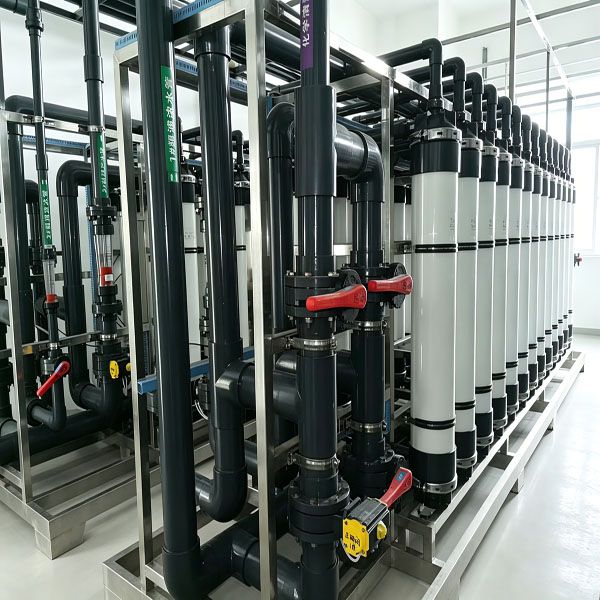
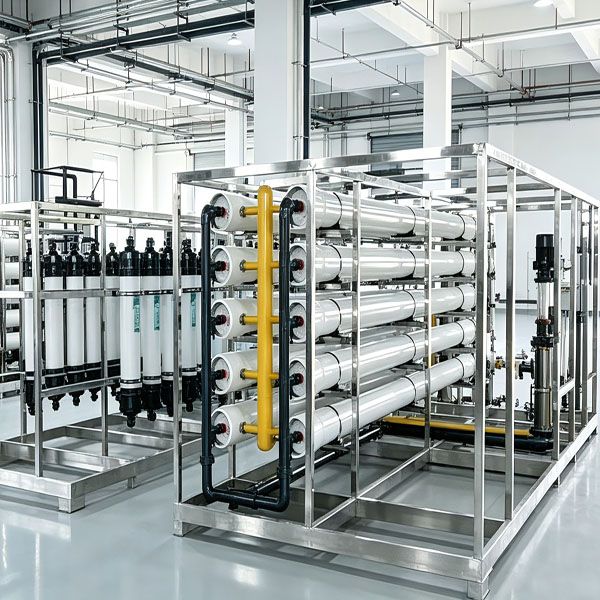
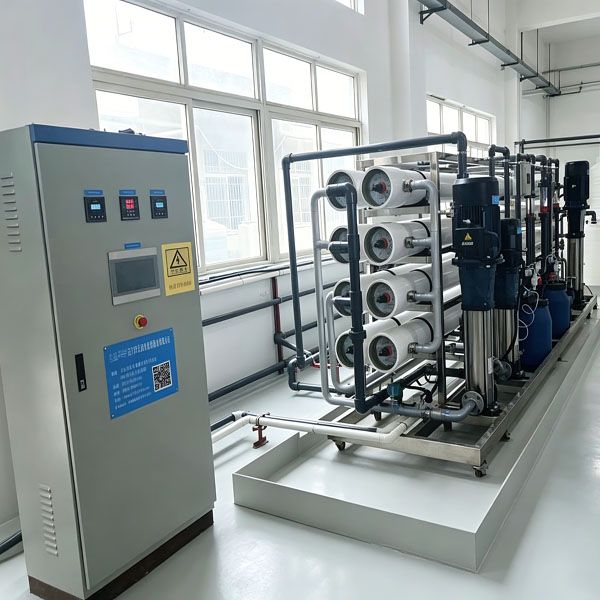
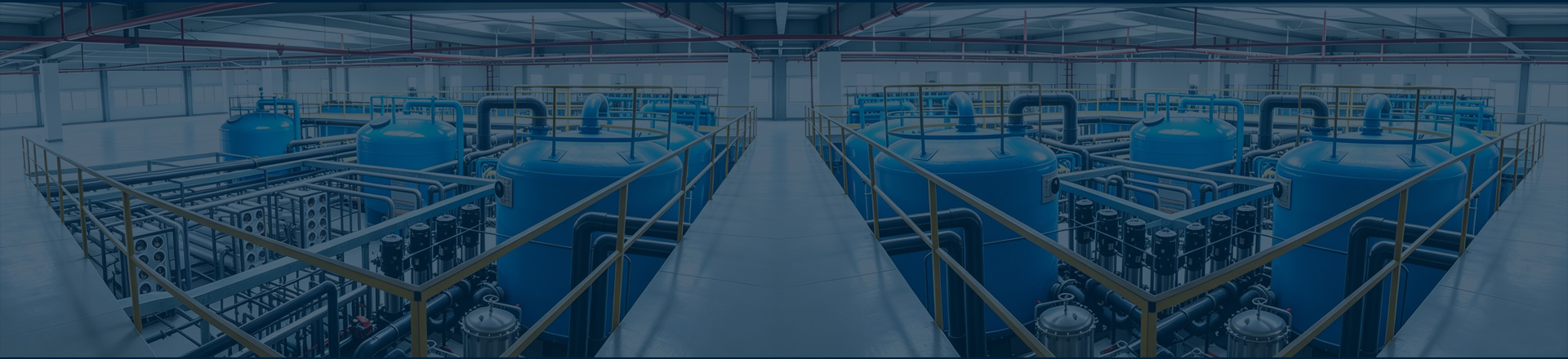
The entire EDI ultrapure water system is divided into four major modules: the pretreatment pre-unit, the EDI main unit, the automatic control and monitoring unit, and the auxiliary circulation and recovery unit:
1. Pre-treatment unit (EDI water inlet guarantee system)
EDI has extremely high requirements for the quality of the inlet water, and the pre-treatment unit provides qualified RO produced water for EDI:
Reverse Osmosis (RO) main unit: primary/secondary reverse osmosis, removing over 99% of inorganic salts, colloids, and suspended solids;
Security filter (5μm/1μm): Intercepts debris and fine impurities shed from the RO membrane to prevent scratching the EDI membrane stack;
Activated carbon filter / TOC removal device: reduces the total organic carbon in the influent water to protect the resin from being contaminated by organic matter;
pH adjusting device: adjust the pH of the influent water to the range of 7.0-9.0 to enhance the desilication effect of EDI;
Booster pressure stabilizing pump: maintains a constant inlet pressure to ensure uniform flow through the membrane stack.
2. EDI host core unit (water production core)
EDI membrane stack (core component): assembled from cation and anion exchange membranes, concentrated water separator, fresh water separator, cation and anion resins, and positive and negative electrode plates; divided into fresh water chamber (producing ultrapure water), concentrated water chamber (collecting ionic wastewater), and electrode water chamber (discharging electrode reaction wastewater);
DC regulated power supply: Provides an adjustable DC electric field ranging from 0 to 300V, powering ion migration and resin regeneration;
Water production/concentrated water/extremely hot water pipeline: PVDF corrosion-resistant pipeline, with three independent water circulation paths;
Circulating booster pump: concentrated water circulating pump, which increases the flow rate in the concentrated water chamber to prevent scaling due to ion enrichment.
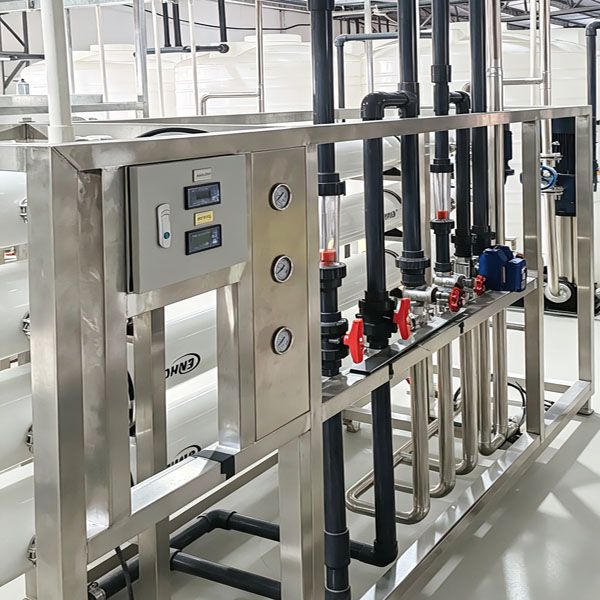
3. Online monitoring and automatic control unit
Online resistivity meter: real-time monitoring of EDI effluent quality, automatic alarm and switch to drainage when exceeding standards;
Conductivity meter: monitors the conductivity of concentrated water and electrode water, and judges the desalination efficiency of membrane stack;
Pressure sensor and flow transmitter: monitor the pressure and flow of inlet water, produced water, and concentrated water;
PLC control cabinet + touch screen: automatic start-stop, interlock protection, fault alarm, data recording;
Solenoid valve and automatic switch valve: If the water quality is unqualified, it will automatically flow back to the original water tank, and unqualified water will not be delivered.
4. Auxiliary recovery and water storage unit
Ultra-pure water tank: equipped with nitrogen seal, breather, and ultraviolet sterilization to prevent secondary contamination of the produced water;
Concentrated water recovery pipeline: EDI concentrated water is returned to the RO raw water tank for secondary use, improving water utilization efficiency;
UV sterilizer / ultrapure column (optional post-processing): further reduces TOC and microorganisms;
Circulating conveying pump: It is used for water circulation at the workshop terminal, ensuring that the pure water in the pipeline does not remain stagnant or diminish.
(IV) Core functions of the system
1. Ion deep desalination function (core water production function)
After being electrified, the resin in the fresh water chamber adsorbs anions and cations from the water. The electric field drives the ions to pass through the ion exchange membrane and enter the concentrated water chamber, where they are continuously discharged along with the concentrated water. This process can remove almost all soluble ions such as calcium, magnesium, sodium, potassium, sulfate, nitrate, and silicate, producing high-resistance ultrapure water.
2. Resin in-situ electrochemical self-regeneration function
The electric field decomposes water into H⁺ and OH⁻, continuously regenerating the saturated resin in the fresh water chamber. The entire process requires no external acid or alkali chemicals, achieving 24-hour continuous water production without interruption.
3. Special removal function for trace silicon and heavy metals
Addressing the challenges in the photovoltaic and electronics industries, we efficiently remove soluble silicon under suitable pH conditions to prevent silicon scale deposition. Simultaneously, we retain heavy metal ions to meet the standards for electronic-grade ultrapure water.
4. Online water quality monitoring and automatic protection function
Real-time collection of water production resistivity, pressure, and flow data, automatic alarm and shutdown protection in case of water quality exceeding standards, water shortage, overpressure, and overload, and automatic return of unqualified water to ensure the safety of production water at the backend.
5. Water-saving function through concentrated water recycling and reuse
The concentrated water circulating pump continuously circulates the concentrated water, reducing the local ion concentration to prevent scaling. The concentrated water is uniformly recycled to the front-end reverse osmosis system, significantly reducing wastewater discharge and enhancing water resource utilization.
6. Fully automatic continuous operation and expansion capabilities
Support 24-hour unattended operation; modular design of membrane stack, allowing multiple groups to be connected in parallel to increase water production. No need to replace the entire equipment for future capacity expansion, just add more membrane stacks and power supplies.
7. Water production and secondary pollution prevention function
The entire water system is constructed from clean and corrosion-resistant materials, paired with a back-end ultraviolet sterilization and nitrogen-sealed pure water tank, which inhibits microbial growth and stably maintains ultra-pure water quality with low TOC and low bacterial count.