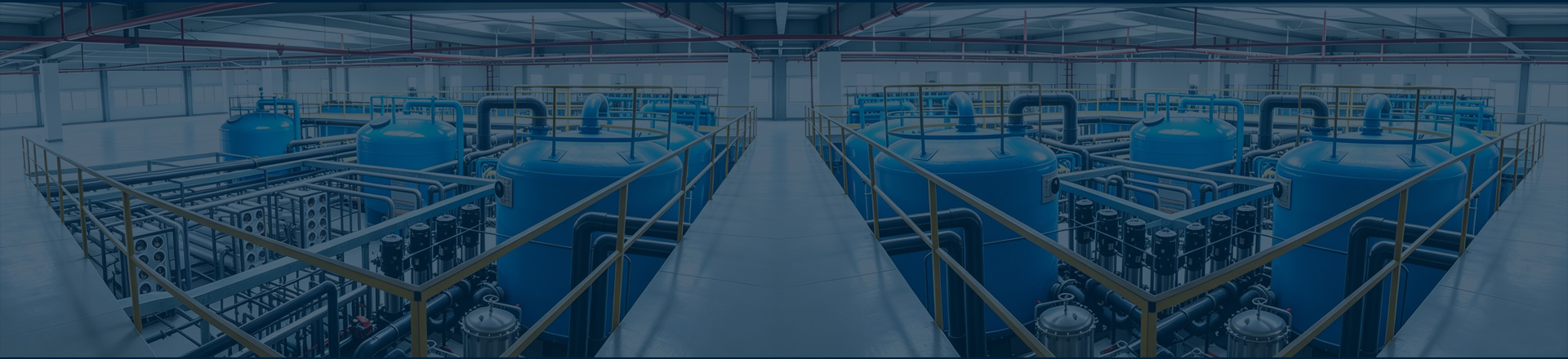


(I) Product Overview
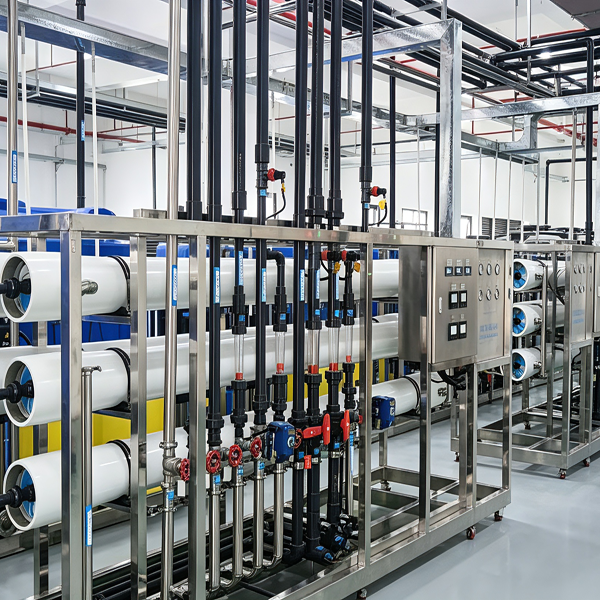
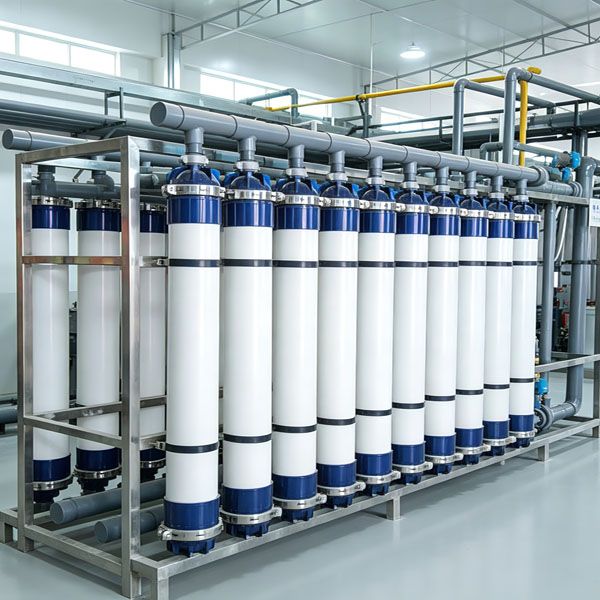
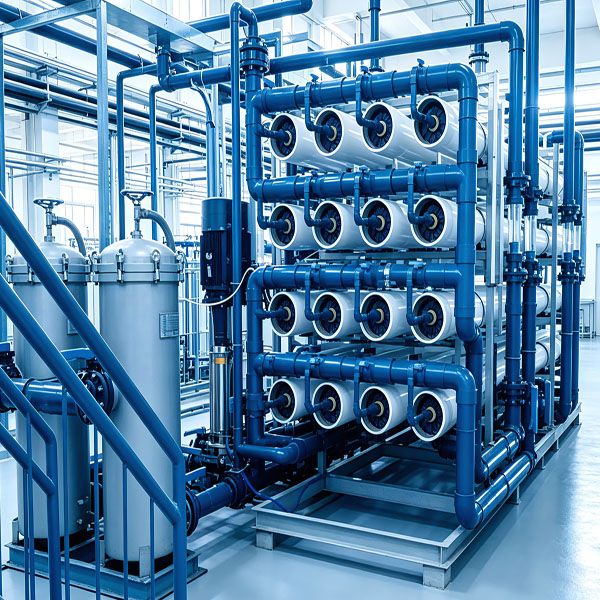
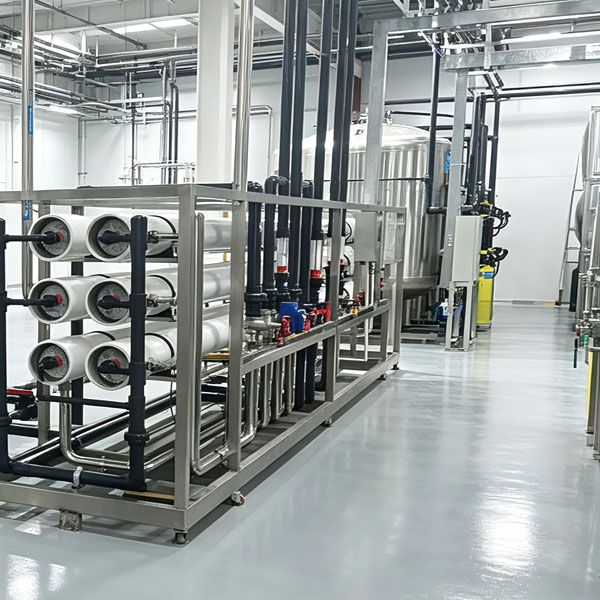
The two-stage reverse osmosis (two-stage RO) pure water equipment utilizes the water produced by the first-stage reverse osmosis as the inlet water, which is then further desalinated by the second-stage reverse osmosis. Relying on the high-pressure screening principle of reverse osmosis membranes, the two stages are connected in series to gradually remove impurities such as salt, colloids, suspended solids, microorganisms, heavy metals, residual chlorine, and organic matter from the water. The desalination rate of single-stage RO is about 97%, while the comprehensive desalination rate of the two-stage process can reach over 99%. The conductivity of the outlet water is stable below 5μS/cm. It is often used as a pre-treatment for EDI ultrapure water equipment and widely applied in industries such as lithium batteries, photovoltaics, electronics, pharmaceuticals, laboratories, cosmetics, food, and beverage. It is the mainstream pre-treatment process for producing high-purity pure water. The inlet water is mostly tap water/groundwater, and the entire equipment can operate fully automatically and continuously, suitable for large-scale industrial pure water production.
(II) Core Features of the Equipment
1.With high desalination accuracy and stable effluent quality, the two-stage series filtration significantly reduces soluble salts, silicon, and heavy metals in water. The effluent quality is less affected by fluctuations in raw water quality, ensuring a stable supply of water that meets EDI inlet water standards.
2.Automated operation with simple operation. Equipped with a PLC-based fully automatic control system, it features automatic start-stop, automatic membrane element flushing, high and low pressure protection, and online water quality monitoring, allowing for 24-hour unattended operation.
3.Water and energy saving, low operating costs; primary concentrated water can be recycled; equipped with a variable frequency high-pressure pump, which adjusts pressure as needed to reduce energy consumption; regular automatic membrane flushing, extending membrane service life and reducing replacement costs.
4.Anticorrosive and clean materials, resistant to secondary pollution. The wetted parts are made of 304 stainless steel, UPVC, and PVDF, ensuring no rust leaching. The supporting pretreatment removes residual chlorine, protecting the reverse osmosis membrane from oxidative damage.
5.Protect the backend EDI and reduce operational and maintenance pressure. The secondary effluent water has extremely low SDI, turbidity, and ion content, significantly reducing the desalination load on the EDI membrane stack, decreasing the probability of EDI scaling and contamination, and extending the service life of the EDI.
6.Modular design, flexible capacity expansion. Standardized configuration of membrane housing and membrane elements allows for direct addition of membrane components to enhance water production in the later stage, without the need to replace the entire equipment.
7.With multiple safety protections, the system boasts a low failure rate. It is equipped with low-pressure water shortage protection, high-pressure overload protection, water quality exceeding standard return flow, and high and low liquid level interlock protection, effectively preventing dry burning of pumps and membrane components and damage from high pressure.With complete pre-treatment facilities, it is compatible with various types of raw water. It can be paired with multi-media filters, activated carbon filters, softeners, and cartridge filters to handle groundwater, tap water, and high-hardness and high-salt content raw water.
(III) Composition of the complete system
The entire two-stage RO system is divided into five major sections: pretreatment unit, primary reverse osmosis unit, secondary reverse osmosis unit, automatic control and monitoring unit, and water tank auxiliary unit
1. Pre-treatment unit (raw water pre-treatment, protecting RO membrane)
Raw water tank and raw water booster pump: store and transport raw water;
Multi-media filter: intercepts sediment, rust, suspended solids, and colloids;
Activated carbon filter: adsorbs residual chlorine, heavy metals, chromaticity, and some organic compounds;
Softener / scale inhibitor dosing device: reduces water hardness and prevents calcium and magnesium scale on the membrane surface;
5μm precision security filter: traps fine impurities to prevent scratching the reverse osmosis membrane.
2. Primary reverse osmosis unit
Primary high-pressure variable frequency pump: Provides the high pressure required for reverse osmosis;
Primary RO membrane housing + reverse osmosis membrane element: initial desalination, producing primary permeate;
Primary concentrated water collection pipeline: store concentrated water for other purposes to enhance water utilization efficiency;
Primary water production tank: Temporarily store primary pure water as a buffer for the secondary RO inlet water.
3. Secondary reverse osmosis unit (core for deep purification)
Secondary booster pump: secondary pressurization of primary pure water;
Secondary RO membrane module: deeply removes residual salt, silicate ions, and trace organic matter;
Alkalization device (optional): adjust the pH of the secondary inlet water, remove carbon dioxide from the water, and reduce the conductivity of the produced water;
Secondary concentrated water return pipeline: The secondary concentrated water is returned to the raw water tank for further filtration, achieving water conservation and reducing consumption.
4. Online monitoring and automatic control unit
Online conductivity meter: It monitors the conductivity of primary and secondary effluent separately, providing an intuitive reflection of the desalination effect;
Pressure transmitter and flow sensor: real-time monitoring of inlet water, produced water, and concentrate pressure and flow;
PLC control cabinet + touch screen: automatic operation, scheduled membrane flushing, fault alarm, parameter recording;
Electric flushing valve and automatic switching valve: automatic backflow flushing in case of unqualified water quality, and no delivery of unqualified water.
5. Auxiliary water storage and conveying unit
Secondary pure water tank: Stores secondary pure water, equipped with a breather and sterilization device to prevent secondary contamination;
Pure water delivery pump: continuously supplying water to EDI equipment and production workshops;
UV sterilizer (optional): eliminates bacteria and microorganisms in water, ensuring water purity.
(IV) Core functions of the system
1. Two-stage ladder-type deep desalination: The first stage preliminarily removes most inorganic salts, colloids, and impurities; the second stage further removes residual trace ions, soluble silicon, and carbon dioxide, achieving a comprehensive desalination rate of ≥99% and producing low conductivity pure water.
2. Automatic membrane element flushing protection: The equipment automatically flushes the membrane surface at scheduled start-up and shutdown times, removing trapped contaminants, slowing down membrane fouling and scaling, and extending the service life of the reverse osmosis membrane.
3. Real-time water quality monitoring and unqualified water return: Conduct real-time monitoring of the conductivity of the produced water. When the water quality exceeds the standard, it will automatically return to the front-end water tank for re-filtration, preventing unqualified water from flowing into the back-end production equipment.
4. High and low pressure, water shortage, and liquid level interlock protection: Low pressure shutdown due to insufficient raw water, automatic pressure relief in case of pipeline overpressure, and interlocked start-stop of water tank based on high and low liquid levels, all of which protect the high-pressure pump and membrane components and reduce the risk of equipment damage.
5. Water-saving function through concentrated water recovery: All secondary concentrated water flows back to the front end for repeated filtration, achieving a comprehensive water recovery rate of 70% to 80%. This reduces wastewater discharge and conserves water resources.
6. pH adjustment and conductivity reduction (optional) Add a small amount of alkali solution to the secondary inlet water to convert CO₂ in the water into removable carbonate, significantly reducing the conductivity of the secondary effluent and meeting the stringent water quality requirements for EDI inlet water.
7. Fully automatic continuous water supply buffering and pressure stabilization system, equipped with a buffering water tank and a variable frequency booster system, stabilizes the water supply flow and pressure, ensuring uninterrupted and stable water intake for downstream EDI and production equipment.
8. Pre-water purification and post-end equipment protection: Remove residual chlorine, suspended solids, hardness, and organic matter, significantly reduce the risk of EDI membrane stack pollution and scaling, and decrease the frequency of EDI maintenance and cleaning.