(I)Product Overview
Softening water equipment, also known as ion exchange softener, uses cation exchange resin as its core to replace calcium and magnesium ions in water with sodium ions, reducing water hardness, removing scaling ions, and producing low hardness softened water. Calcium and magnesium ions in water can form calcium carbonate and magnesium carbonate scale on the inner walls of pipelines, membrane components, heat exchangers, and boilers, blocking pipelines, reducing heat transfer efficiency, and damaging reverse osmosis membranes. Softening equipment is widely used for boiler makeup water, circulating cooling water, pure water/ultrafiltration/RO pre-treatment, central air conditioning, and bath water treatment. It is divided into two mainstream models: automatic multi way valve integrated water softener and double valve double tank continuous water supply. It relies on salt tank regeneration resin, fully automatic circulation operation, and stable control of effluent hardness ≤ 0.03mmol/L.
(II) Core features of the equipment
1. Efficient removal of hardness ions, prevention of scale formation, resin adsorption of calcium and magnesium ions, significantly reducing water hardness, avoiding scaling of RO membranes, heat exchangers, and heating equipment, and extending the service life of backend water treatment equipment.
2. Fully automatic intelligent regeneration, without the need for manual operation. The built-in time/flow dual control regeneration program automatically starts the entire regeneration process of backwashing, salt absorption, replacement, forward washing, and water injection when the water production meets the standard or reaches the set time. It is unmanned 24 hours a day.
3. The dual tank model can provide continuous and uninterrupted water supply, with one in use and one as backup for alternate regeneration. During the regeneration period, the soft water output is not interrupted, making it suitable for 24-hour continuous water use in factories; Single tank small equipment has high cost-effectiveness and is suitable for intermittent water use.
4. The cost of regenerated consumables is low, and the operation of economic regeneration only uses industrial salt. The chemicals are easy to obtain and the dosage is small. Compared with scale inhibitors, the long-term use cost is lower, and there is no risk of chemical residue.
5. Compact structure, small installation area, integrated fiberglass resin tank, integrated multi way control valve, no need for complex civil engineering, can be placed indoors and outdoors, easy disassembly and maintenance.
6. Corrosion resistant and durable, suitable for various types of raw water tanks. The tank body is made of pressure resistant fiberglass, and the pipeline is made of UPVC/304 stainless steel, which is acid and alkali resistant, corrosion-resistant, and can treat high hardness raw water such as tap water, groundwater, and well water.
7. Protecting the backend membrane system and reducing operation and maintenance costs as a pre-treatment for RO and ultrafiltration, significantly reducing inorganic scale blockage on the membrane surface, reducing the frequency of membrane chemical cleaning, and saving chemical and labor costs.
8. Easy to operate, easy to troubleshoot control valve visual operation panel, equipped with regeneration fault alarm, salt tank shortage reminder, daily only need to replenish salt regularly, low maintenance threshold.
(III) Complete system composition
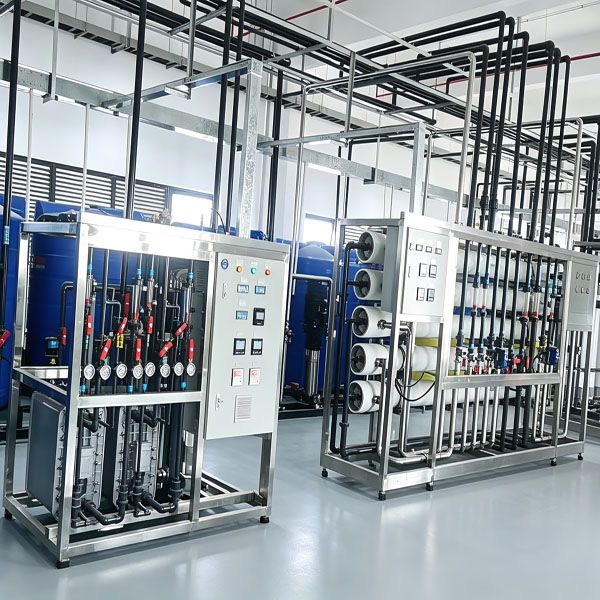
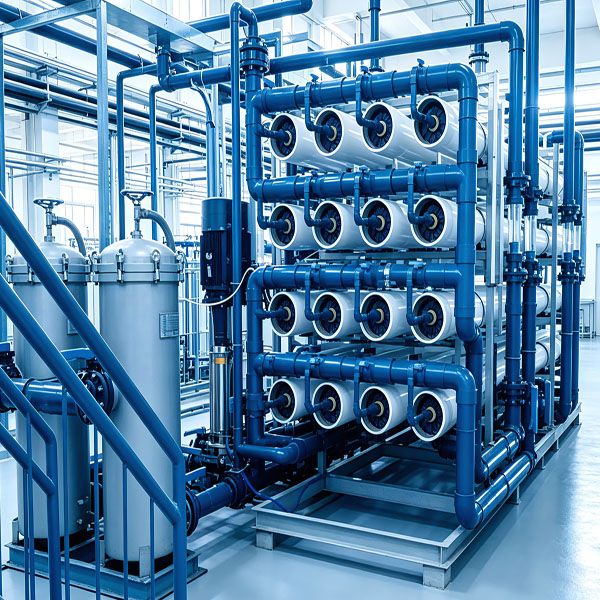
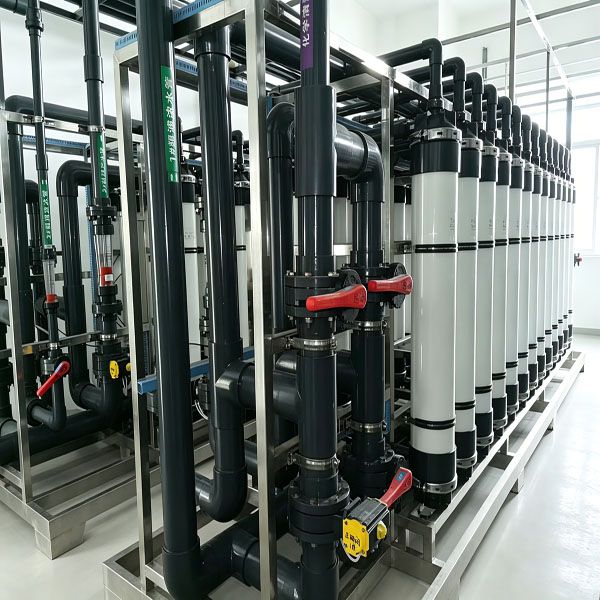
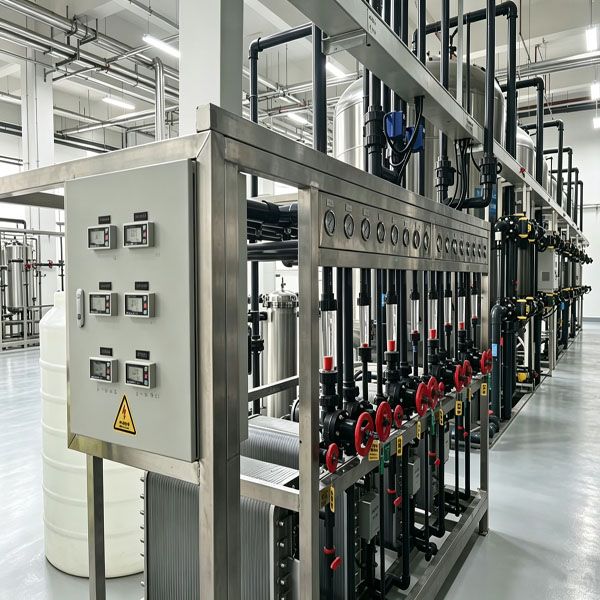
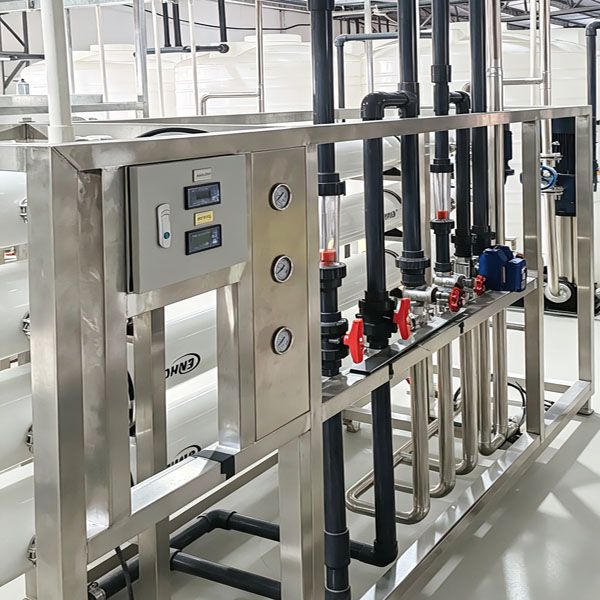
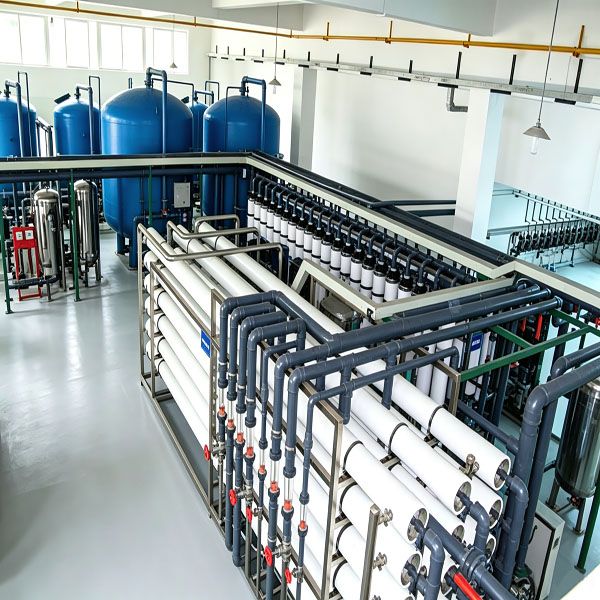
The entire softened water equipment is divided into five modules: water supply unit, exchange host unit, regenerated salt tank unit, automatic control unit, and softened water storage unit
1. Pre water supply unit
Raw water tank/water supply booster pump: stably delivers raw water to the softening host;
Pre filter (optional): intercepts sediment and rust to prevent impurities from entering the resin tank and scratching the control valve and resin.
2. Core unit of ion exchange host
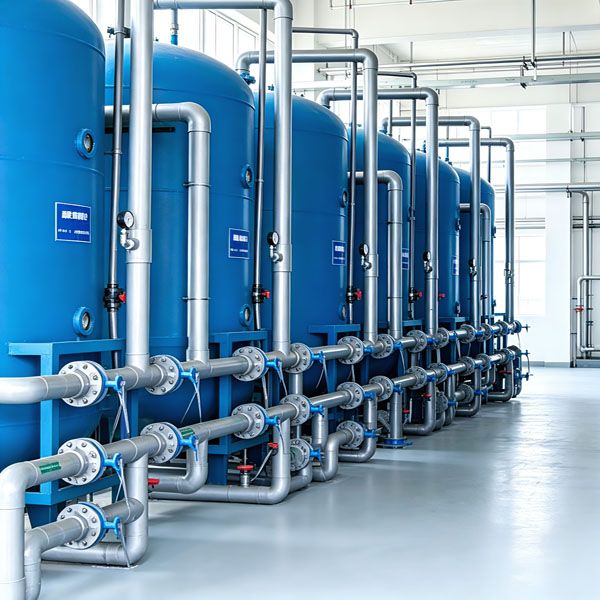
Resin exchange tank (fiberglass pressure tank): loaded with strong acidic cation exchange resin, the site where calcium and magnesium ion displacement reactions occur;
Upper and lower water distributor: evenly distribute water to prevent resin loss and water flow deviation;
Central lifting tube: distributes water flow and completes the switch between water production and regeneration channels.
3. Regenerated salt tank supporting unit
Salt dissolution tank: stores industrial salt and automatically dissolves saturated saltwater;
Salt valve and salt suction pipeline: During the regeneration stage, negative pressure is used to suck in saturated salt water and regenerate the saturated resin;
Salt level monitoring device (optional): Automatic salt shortage reminder to avoid regeneration failure.
4. Automatic control unit (core control component)
Fully automatic multi way control valve (time/flow type): automatically switches between six major processes: water production, backwashing, salt absorption, slow washing, fast washing, and water injection;
Flow sensor: Accumulate water production and automatically trigger regeneration when reaching the set tonnage;
Control panel: parameter settings, manual regeneration start, fault prompts;
Pressure protection valve: prevents overpressure from damaging the tank and pipelines.
5. Soft water storage and transportation unit
Softened water tank: stores standard softened water and buffers fluctuations in water volume;
Soft water delivery pump: delivers softened water to the boiler, circulating water, and RO pretreatment system.
(IV) Core functions of the system
1. Cation exchange softens hard water, reducing the hardness of water. Sodium ions on the resin are replaced with calcium and magnesium ions in the water to remove scaling ions and produce low hardness soft water, preventing scaling and blockage of heat exchange equipment and membrane components.
2. Fully automatic cycle regeneration, resin continuously recovers adsorption capacity. After resin adsorption saturation, the equipment automatically completes the entire regeneration process: backwash → salt absorption regeneration → slow wash replacement → positive wash flushing → salt tank replenishment, resin recovers exchange capacity, and is repeatedly used in a cycle.
3. Dual mode intelligent control of flow/time. The flow type regenerates based on actual water production, extending the regeneration cycle when water consumption is low and saving salt; Time based fixed cycle regeneration, suitable for water stable scenarios.
4. Double tank, one in use, one backup continuous water supply (dual model). During single tank regeneration, the other tank produces water normally, achieving uninterrupted supply of softened water to meet the continuous water demand of production lines and boilers.
5. Backwash self-cleaning to prevent clogging of resin plates. Before regeneration, backwash the resin layer in reverse to remove trapped sediment and suspended solids, loosen the resin, and avoid short circuiting of water flow inside the tank and a decrease in treatment efficiency.
6. Source scale inhibition, protecting the entire water treatment equipment in the backend by removing the vast majority of hardness ions, reducing the risk of scaling in reverse osmosis and ultrafiltration membranes, reducing the amount of scale inhibitor added, and lowering the frequency of equipment cleaning and maintenance.
7. The liquid level linkage automatic start stop is combined with the high and low liquid level signals of the soft water tank to link the water pump and soft water equipment. It automatically stops when there is no water, and automatically stands by when full, saving energy and reducing consumption.
8. Low maintenance operation, simple operation and maintenance management, only regularly supplementing industrial salt on a daily basis, no complex chemical ratio, fully automated regeneration process, significantly reducing manual duty workload.