

(I) Product Overview
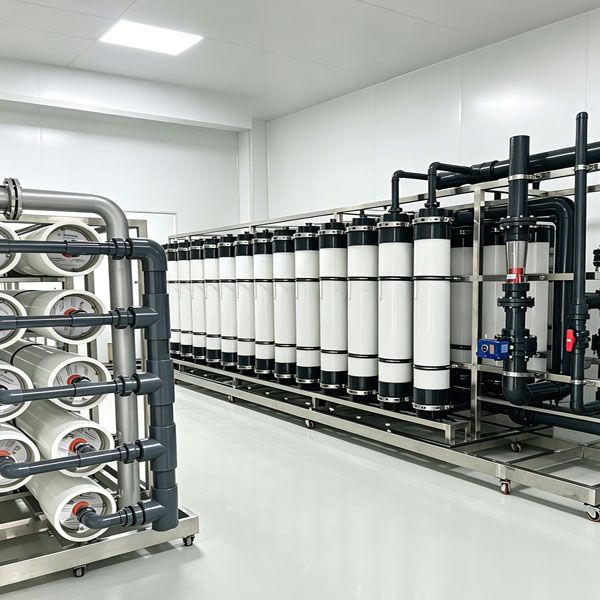
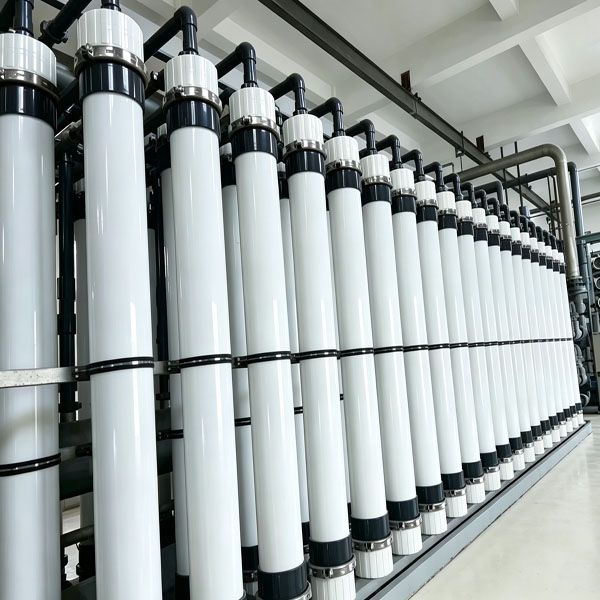
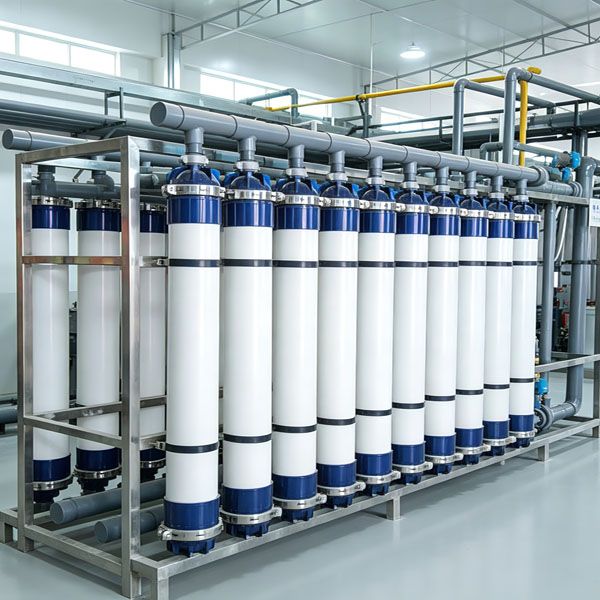
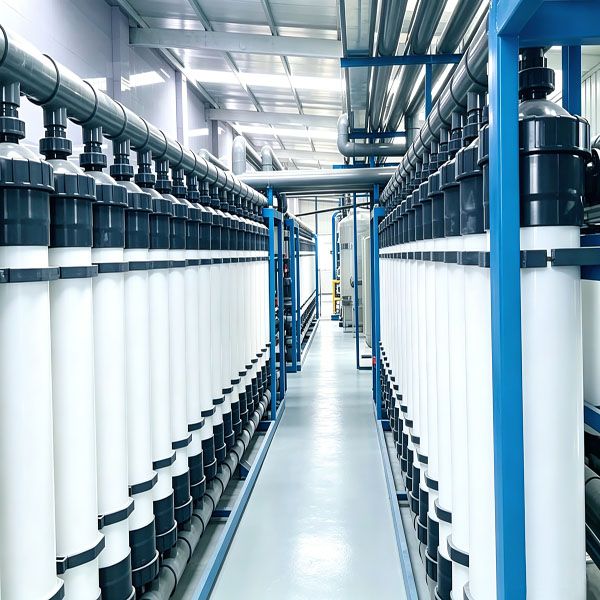
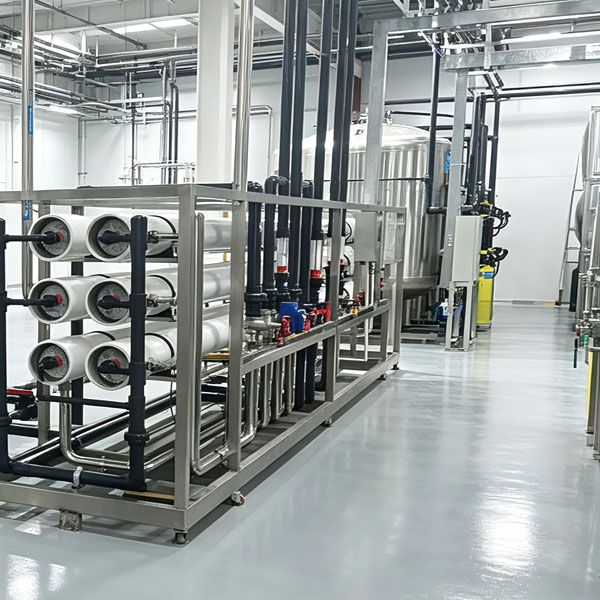
Ultrafiltration (UF) equipment, with ultrafiltration membranes as its core, is a precision membrane separation and filtration device driven by pressure. It achieves solid-liquid separation based on the membrane pore size screening principle. The pore size of ultrafiltration membranes typically ranges from 0.01 to 0.1 μm, effectively retaining colloids, suspended solids, sediment, rust, algae, bacteria, viruses, macromolecular organics, colloidal silica, flocculated flocs, etc., while allowing water molecules and small inorganic salt ions to pass through. It is often used as a pretreatment for reverse osmosis (RO) and electrodialysis (EDI) systems, and can also be applied to advanced filtration for reclaimed water reuse, tap water purification, industrial circulating water purification, and sewage advanced treatment. Ultrafiltration equipment is divided into two major categories: hollow fiber ultrafiltration (the mainstream) and roll ultrafiltration, and operates in two modes: internal pressure and external pressure. It can operate fully automatically and continuously, making it an essential pre-security filtration unit in pure water and reclaimed water processes.
(II) Core Features of the Equipment
1. Precise physical screening to remove colloids and microorganisms. With micron-level fine filtration, it can effectively remove colloids, suspended solids, and bacteria that cause RO membrane blockage, significantly reducing the SDI value of the inlet water and protecting the downstream reverse osmosis membrane.
2. Stable water production flux and excellent anti-pollution performance. The hollow fiber membrane has a large surface area and high flow capacity; the PVDF material is resistant to acids and alkalis, oxidants, oil, and organic pollution, with good recovery of flux after cleaning.
3. Fully automatic air-water combined cleaning, with simple operation and maintenance. Equipped with automatic aeration scrubbing, forward flushing, and reverse flushing programs, it automatically removes trapped pollutants from the membrane surface at regular intervals, making it less prone to clogging and significantly reducing the frequency of manual cleaning.
4. Modular combination, flexible and adjustable water production capacity. The standard membrane module adopts a modular design, allowing for the free addition or removal of individual membrane elements. Equipment ranging from a few tons to hundreds of tons can be quickly assembled, making expansion convenient.
Low operating pressure, energy and water conservation. The operating pressure is only 0.1~0.3MPa, resulting in low energy consumption during low-pressure operation. The cross-flow filtration process allows concentrated water to flow back to the front-end water tank, achieving high water resource utilization.
5. The material is corrosion-resistant and clean, without secondary pollution. The membrane components are made of PVDF, and the pipelines are made of UPVC/304 stainless steel, which do not leach harmful substances. It is suitable for pure water pre-treatment, food, and pharmaceutical clean water treatment scenarios.
With self-controlled interlocking multiple protections, it operates stably. It features interlocking shutdowns for high and low liquid levels, low pressure and water shortage, and high pressure overload. The produced water quality is monitored in real-time, and automatic alarms are triggered for abnormalities. It can operate unattended for 24 hours.
Reduce backend equipment operation and maintenance costs. The pre-ultrafiltration process can stabilize the influent SDI below 3, significantly reducing RO membrane colloidal fouling and cleaning frequency, and extending the service life of the reverse osmosis membrane.
(III) Composition of the complete system
The entire ultrafiltration system is divided into six parts: raw water supply unit, ultrafiltration host membrane module, air-water flushing unit, dosing and cleaning unit, automatic control and monitoring unit, and produced water and concentrated water collection unit
1. Raw water supply pretreatment unit
Raw water tank / intermediate water tank: Buffer incoming water and balance water quantity and quality;
Boosting booster pump: Provides stable operating pressure for the ultrafiltration system;
Prefiltration bag/precision filter: Intercepts hair, large sediment particles, and fibers to prevent scratching the ultrafiltration membrane fibers.
2. Core unit of ultrafiltration host
Ultrafiltration membrane module (hollow fiber PVDF membrane): core filtration element, divided into two paths: permeate and concentrate;
Membrane housing and frame: used to secure the membrane components and provide pressure-bearing sealing;
Water production main pipe and concentrated water circulation pipeline: achieve cross-flow filtration and concentrated water reflux circulation.
3. Gas-water combined flushing unit (key to anti-clogging)
Aeration fan/air pump: Provides compressed air to scrub pollutants from the surface of membrane fibers;
Wash electric valves and backwash pipelines: achieve forward flushing and reverse water production flushing;
Cleaning water tank: store the produced water for automatic membrane flushing.
4. Chemical cleaning dosing unit (optional)
Two sets of chemical cleaning tanks: each equipped with sodium hypochlorite (for sterilization and removal of organics) and acid-base cleaning solution (for removal of inorganic colloidal scale);
Cleaning circulating pump: Offline chemical circulating cleaning to restore membrane flux;
Metering dosing device: Routine maintenance involves adding a small amount of bacteriostatic agent to inhibit the growth of bacteria and algae on the membrane surface.
5. Online monitoring and automatic control unit
Online turbidity meter and SDI tester: monitor the cleanliness of ultrafiltration water production;
Pressure transmitter and flow sensor: monitor the pressure and flow of inlet water, produced water, and concentrated water;
PLC touch screen control cabinet: automatic operation, scheduled air/water washing, automatic chemical cleaning program, audible and visual fault alarm;
Electric switching valve: If the water quality does not meet the standard, it will automatically flow back to the front water tank for re-filtration.
6. Water production and concentrated water collection unit
Ultrafiltration water production tank: stores filtered clean water and supplies it to the secondary RO/EDI system;
Concentrated water return pipeline: Most of the concentrated water returns to the raw water tank for circulation and filtration, with a small amount being discharged;
Delivery pump: Delivers ultrafiltrated water to the downstream reverse osmosis system.
IV. Core functions of the system
1. Fine screening and purification reduce the SDI of the influent water by intercepting colloids, suspended solids, bacteria, microorganisms, and macromolecular organic matter, stabilizing the SDI of the effluent water to ≤3, meeting the reverse osmosis influent water standard, and protecting the RO membrane.
2. Crossflow filtration + automatic air-water washing for anti-clogging: The use of crossflow operation reduces the deposition of pollutants; scheduled air scrubbing + forward and reverse flushing continuously removes trapped impurities from the membrane surface, ensuring long-term stable water production flux.
3. Hierarchical cleaning to restore membrane performance: Daily automatic hydraulic flushing; regular chemical cleaning to remove organic pollution and biological slime on the membrane surface, restore filtration flux, and extend membrane service life.
4. Fully automatic unattended cyclic operation: The water tank level linkage pump set starts and stops automatically, executing the flushing procedure without requiring manual timing operations, suitable for continuous production water use in factories.
5. Real-time monitoring of water quality and unqualified water reflux: Real-time monitoring of turbidity in produced water, and automatic reflux to the front-end for secondary filtration if water quality exceeds standards, to prevent dirty water from entering the back-end precision membrane equipment.
6. Low-pressure energy-saving filtration and water resource recovery: Low-pressure operation results in low energy consumption; most of the concentrated water is recirculated, achieving a water recovery rate of over 90% in the system, thereby reducing wastewater discharge.
7. Antimicrobial pretreatment to inhibit biological contamination. It can be paired with sodium hypochlorite dosing to kill bacteria and algae in the water, preventing biological slime contamination of downstream RO and EDI membranes.
8. Modular expansion adapts to multiple process scenarios. It can be used as pre-filtration for pure water production lines, as well as for reclaimed water reuse, circulating water purification, and deep filtration of tap water. The membrane components can be flexibly increased or decreased according to the water volume.