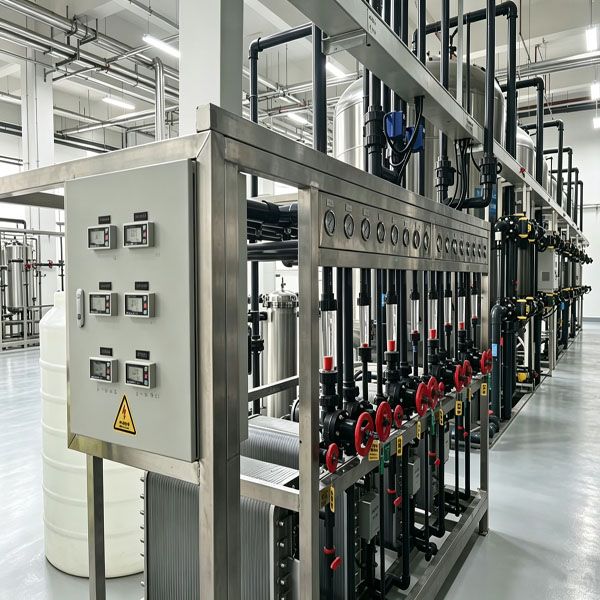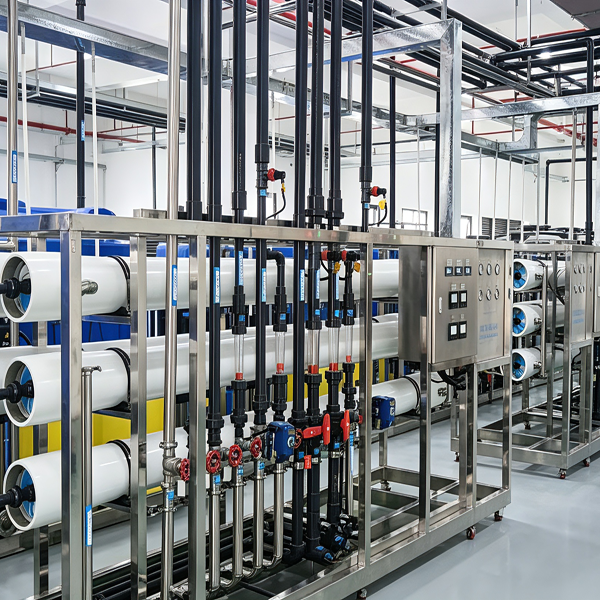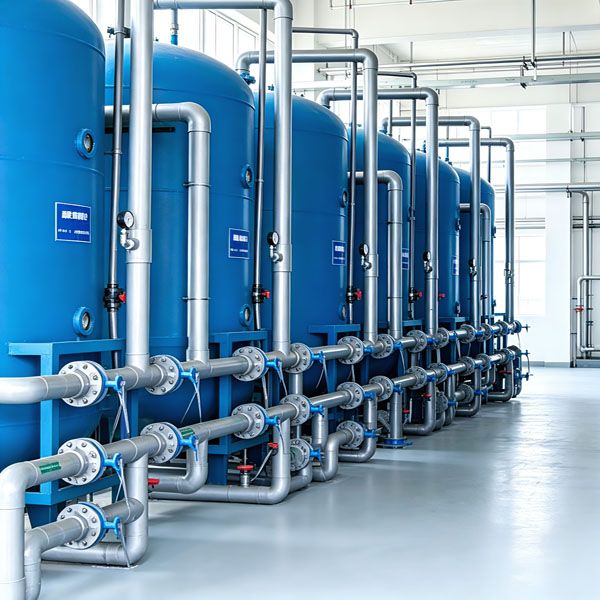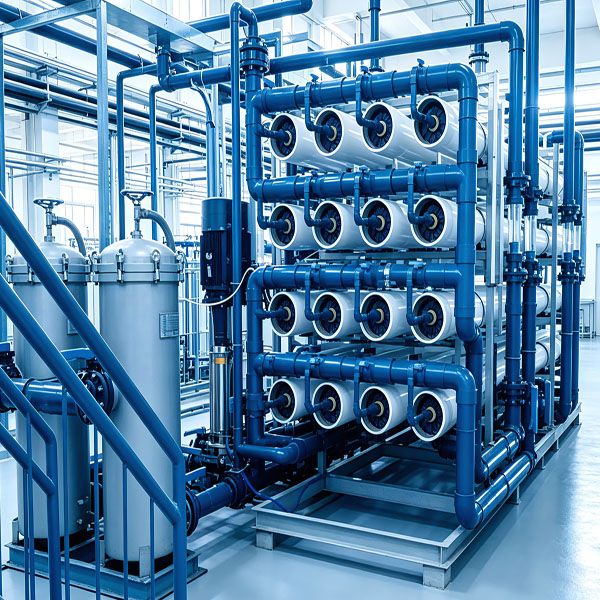
(I)Product Overview
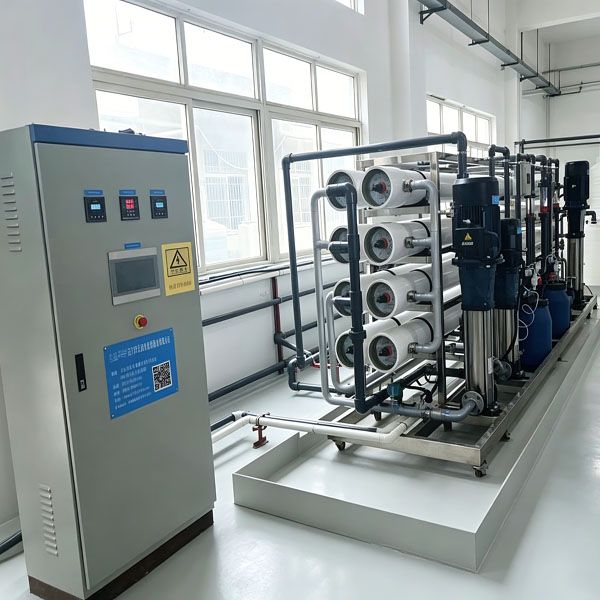
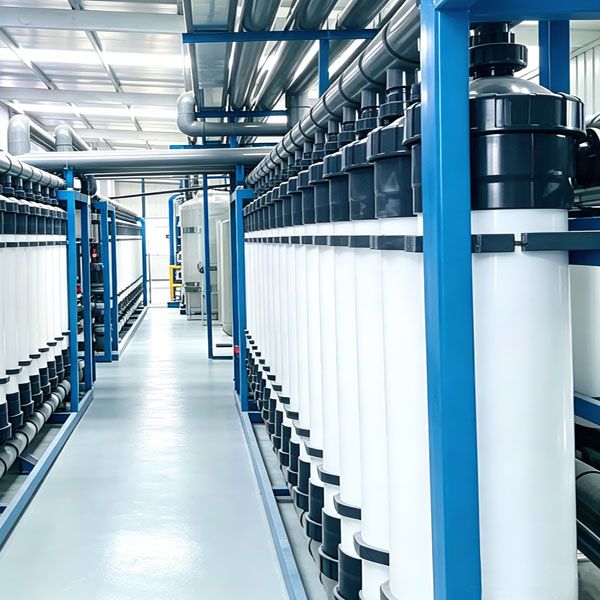
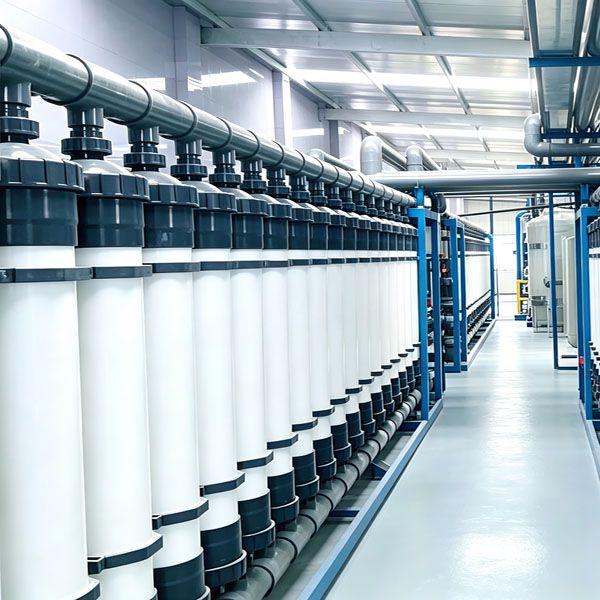
Ultrafiltration (UF) equipment is a precision membrane separation device with ultrafiltration membrane as the core. It is driven by pressure and relies on the membrane pore size sieving effect to complete solid-liquid separation. The pore size range of ultrafiltration membrane is 0.01-0.1 μ m, which can effectively intercept colloids, suspended particles, sediment, rust, algae, bacteria, viruses, macromolecular organic matter, colloidal silica, and flocs in water. Water molecules and small molecule salt ions can freely pass through the membrane layer.
(II) Equipment features
1. Precision physical screening provides strong protection for the back-end RO system. With micrometer level precision physical screening technology, it can efficiently intercept colloids, suspended impurities, bacteria and other pollutants that are prone to clogging the reverse osmosis membrane, effectively reducing the SDI value of the influent and avoiding the risk of RO membrane fouling and blockage from the source, providing stable influent conditions for the back-end reverse osmosis system.
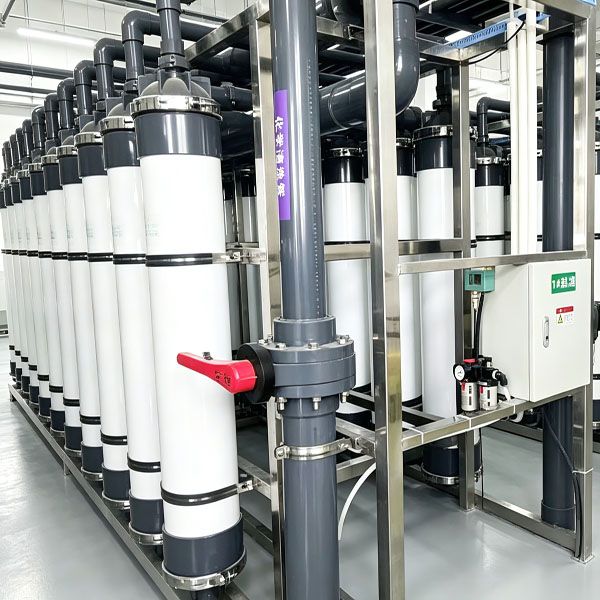
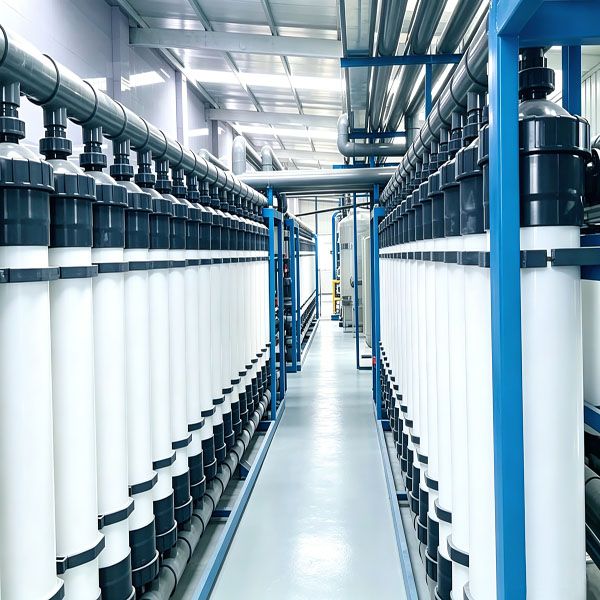
2. Stable and long-lasting flux, excellent anti fouling performance of membrane elements. The equipment adopts hollow fiber ultrafiltration membrane, with a large effective contact area between membrane fibers, sufficient water production flux, and stable operation; The core membrane components are made of PVDF material, which has excellent acid and alkali resistance, oxidation resistance, oil resistance, and organic pollution resistance. After cleaning, the membrane flux recovery effect is excellent, and the long-term operational performance deteriorates slowly.
3. Fully automatic air-water combined cleaning, convenient and worry free operation and maintenance. The system is equipped with a fully automatic air-water combined scrubbing process, integrating automated processes such as aeration scrubbing, forward flushing, and reverse flushing. It can regularly remove trapped pollutants attached to the membrane surface, eliminate membrane pore blockage problems, and significantly reduce manual intervention and cleaning frequency.
4. Modular and flexible configuration, with strong energy-saving and water-saving economy. Adopting standardized modular membrane module design, membrane components can be freely added or removed according to water production needs, and can be flexibly adapted from small equipment to large-scale systems of up to 100 tons. It is convenient for capacity expansion in the later stage. The equipment only needs to operate at low pressure of 0.1~0.3MPa, with extremely low energy consumption; Combined with cross flow filtration technology, concentrated water can be recycled back to the front water tank for efficient utilization of water resources.
5. Clean and anti-corrosion materials are used to prevent secondary water pollution. PVDF membrane components are used for the core water related components of the equipment, and UPVC and 304 stainless steel clean and anti-corrosion materials are selected for the pipelines. The materials are stable and free of harmful substances, suitable for high standard clean water treatment scenarios such as pure water preparation, food, medicine, etc., to ensure the safety of the effluent water quality.
6. Multiple automatic control interlocks, equipped with a complete intelligent automatic control system for 24/7 stable operation. Multiple interlock protections are set for high and low liquid levels, low pressure water shortage, and high pressure overload. It is also equipped with real-time water quality online monitoring function. Abnormal water quality and equipment failure can automatically alarm and stop for protection, supporting 24-hour unmanned continuous stable operation.
7. Reducing the burden on backend equipment and significantly reducing operation and maintenance costs. As the core pre-treatment equipment for RO systems, it can stably control the influent SDI value within 3, significantly reducing the probability of colloid pollution and scaling of reverse osmosis membranes, lowering the frequency of chemical cleaning of RO membranes, effectively extending the service life of reverse osmosis membranes, and significantly reducing the operation and consumables costs of backend equipment.
(III)System composition
1. Raw water supply pretreatment unit
Mainly responsible for inlet buffering and pre filtration, providing stable water supply for subsequent equipment. The water tank is used to store and balance the amount and quality of incoming water; The booster pump provides stable operating water pressure for the entire system; The pre filter can intercept large particle impurities such as sediment, hair, and fibers, protecting the ultrafiltration membrane from scratches and damage.
2. Core unit of ultrafiltration host
The core filtering module of the system. The core component is PVDF hollow fiber ultrafiltration membrane, which is a key element for water quality filtration. After filtration, the purified water and concentrated water are output in two channels; Paired with membrane shell and membrane frame to fix protective membrane components, water flow cross flow filtration is achieved through matching pipelines, and concentrated water can be recycled for treatment, improving water resource utilization efficiency.
3. Gas water combined flushing unit
Specially designed to prevent ultrafiltration membrane blockage, it is the key to ensuring the long-term operation of the equipment. The fan and air pump output compressed air to wipe and clean the pollutants attached to the surface of the membrane fibers; Complete forward and reverse water washing operations through valves and pipelines; The dedicated cleaning water tank stores purified water and provides a water source for automatic flushing of equipment.
4. Chemical cleaning dosing unit (optional)
Used for deep cleaning and restoring the filtration performance of membrane elements. Equipped with two sets of medicine washing boxes, each storing disinfectant and organic matter removal agents, as well as acid-base agents for removing scale colloids; Circulating pumps can perform offline cyclic cleaning of membrane components to restore filtration flux; The dosing device can be used for daily micro dosing to inhibit the growth of bacteria and algae on the membrane surface.
5. Online monitoring and self-control unit
Responsible for intelligent operation of equipment and water quality monitoring. Various sensors and detectors monitor core data such as water quality, water pressure, and water flow in real-time; The PLC control cabinet enables fully automatic operation of the equipment, and can complete scheduled air washing, water washing, and chemical washing operations. Equipment failures will automatically sound and light alarms; When the water quality does not meet the standard, the valve automatically switches to allow the water flow to reflux and re filter, ensuring the quality of the effluent.
6. Concentrated water collection unit for water production
Responsible for the storage, circulation, and transportation of filtered water quality. The clean water tank stores filtered clean water to supply water to back-end reverse osmosis and other equipment; Most of the concentrated water flows back to the front water tank for secondary filtration, and a small amount of wastewater is discharged; The transfer pump delivers qualified purified water to the subsequent water treatment equipment.